
The National Pest Management Association (NPMA) released an news article on the Environmental Protection Agency (EPA) limitations on certain rodenticides and requirements for tamper-resistant bait stations by announcing its intent to cancel the registration of certain do-it-yourself rodent control products. The affected products are sold to consumers as loose baits and don’t have protective bait stations that prevent access by children and pets.
In the works for more than a decade, the cancellation has been under extensive study and review to ensure a final action in the best interest of American public health. In short, the mandate will remove products from the market that pose unacceptable risks to children, pets and wildlife. This important decision underscores the need for professionalism in treatment and allows the pest management industry to retain the means for providing effective, affordable services that protect consumers from rodent-borne dangers.
Since 1998, NPMA has worked with the EPA as rodenticide products have undergone considerable reevaluation to ensure all registered products meet today’s health and safety standards. This working relationship has proven beneficial, as it not only focuses upon protecting public health but also promoting the highest level of professionalism within the pest management industry.
If you're concerned about rodents in your home or place of business, give Dave a call at 1-800-400-6009.
Dave's Pest Control
1-800-400-6009
A Central Massachusetts Extermination and Pest Control
Company
Worcester County Pest and Rodent Exterminators
www.davespestcontrol.net
Reference: www.pestworld.org
Showing posts with label national pest management association. Show all posts
Showing posts with label national pest management association. Show all posts
March 8, 2013

February 28, 2013
House Flies
While house flies do not bite, they are capable of transferring more than 100 pathogens, including malaria, salmonella and tuberculosis.
House flies "contaminate food and surfaces by spreading disease organisms picked up on the silla on their bodies and through their saliva that is used to break down foods. And if that's not enough, they defecate constantly,"
said Missy Henriksen, vice president of public
affairs for the National Pest Management Association (NPMA).
 House flies procreate quickly and in large quantities. While they have been known to move 20 miles from where they were hatched, they typically stay within a mile of their birthplace. Do to their attraction to manure and other organic matter, the NPMA recommends that homeowners follow these tips to help prevent house flies in their own homes:
Dave's Pest Control
1-800-400-6009
A Central Massachusetts Extermination and Pest Control Company
Worcester County Pest and Rodent Exterminators
www.davespestcontrol.net
Reference: www.pestworld.org
 House flies procreate quickly and in large quantities. While they have been known to move 20 miles from where they were hatched, they typically stay within a mile of their birthplace. Do to their attraction to manure and other organic matter, the NPMA recommends that homeowners follow these tips to help prevent house flies in their own homes:
- Keep kitchen trash in sealed containers and the receptacles as clean as possible.
- Dispose of waste regularly and keep away from your home. Be aware of sources of excessive moisture.
- Keep counters and surfaces clean.
- Prevent home access by keeping doors, windows and vents closed when possible.
- Properly screen windows and seal potential entryways, repairing any rips or tears in screens.
- If you have dogs, horses or other animals near the home, remove feces from the yard and surrounding areas.
Dave's Pest Control
1-800-400-6009
A Central Massachusetts Extermination and Pest Control Company
Worcester County Pest and Rodent Exterminators
www.davespestcontrol.net
Reference: www.pestworld.org
December 18, 2012
Keeping Pests Out of Your Kitchen
I thought I'd share this educational video by
Missy Henriksen, VP of public affairs for the National Pest Management Association, on more tips to prevent pantry pests from ruining your baking fun.
Keep Pests out of Your Kitchen
And remember, if you're concerned that you have insects or rodents in your home or place of business, give Dave a call at 1-800-400-6009.
Dave's Pest Control
1-800-400-6009
A Central Massachusetts Extermination and Pest Control Company
Worcester County Pest and Rodent Exterminators
www.davespestcontrol.net
Reference: www.pestworld.org
Keep Pests out of Your Kitchen
And remember, if you're concerned that you have insects or rodents in your home or place of business, give Dave a call at 1-800-400-6009.
Dave's Pest Control
1-800-400-6009
A Central Massachusetts Extermination and Pest Control Company
Worcester County Pest and Rodent Exterminators
www.davespestcontrol.net
Reference: www.pestworld.org
December 16, 2012
Keeping Pests Out Of Your Holiday Goodies
Here are a few tips from the National Pest Management Association (NPMA) to help prevent unwanted "guests" from getting into your holiday goodies.
Dave's Pest Control
1-800-400-6009
A Central Massachusetts Extermination and Pest Control Company
Worcester County Pest and Rodent Exterminators
www.davespestcontrol.net
Reference: www.pestworld.org
- Immediately wipe up any crumbs or spills from countertops, tables, floors and shelves.
- Store food in airtight containers and dispose of garbage regularly in sealed receptacles.
- Only purchase food in sealed packages that show no sign of damage.
- Add a bay leaf to canisters and packages of dry goods like flour, rice and other grains- their pungent scent repels many pantry pests.
- Install door sweeps on exterior doors and repair damaged screens.
- Check expiration dates on baking ingredients before use.
- Eliminate all moisture sites, including leaking pipes and clogged drains.
Dave's Pest Control
1-800-400-6009
A Central Massachusetts Extermination and Pest Control Company
Worcester County Pest and Rodent Exterminators
www.davespestcontrol.net
Reference: www.pestworld.org
November 28, 2012
Spider Bites - Part Three
This is the last installment of Dr. Jorge Parada's article on spider bites written for PestWorld.
If you suspect a spider has bitten you, try to bring it with you to the doctor so they can determine the best course of treatment based on the species. Clean the site of the spider bite well with soap and water. Apply a cool compress over the spider bite location (using a cloth dampened with cold water or filled with ice). If you suspect the bite is form a black widow or brown recluse spider, and the bite is on an extremity, elevate it. Consider tying a snug bandage above the bite and elevate the limb to help slow or halt the venom's spread. Ensure that the bandage is not so tight that it cuts off circulation in your arm or leg. Adults can take aspirin or acetaminophen and antihistamines to relieve minor signs and symptoms (but use caution when giving aspirin to children or teenagers). Seek medical attention for any severe signs and symptoms, or if signs and symptoms continue to worsen for more than 24 hours.
If a local reaction continues to get worse for more than 24 hours, it may be time to seek medical attention. Look for redness spreading away from the bite, drainage from the bite, increase in pain, numbness/tingling, or a discoloration around the bite that looks like a halo or bull’s-eye. If generalized symptoms set in, be concerned. In very rare cases, there have been reports of spider bites (by spiders considered otherwise harmless) causing allergic reactions - including anaphylactic shock, a life-threatening condition (much like may result from the sting of a bee, or wasp in a highly allergic person).
If you're concerned about spiders in your home or place of business, give Dave a call at 1-800-400-6009.
Dave's Pest Control
1-800-400-6009
A Central Massachusetts Extermination and Pest Control Company
Worcester County Pest and Rodent Exterminators
www.davespestcontrol.net Reference: www.pestworld.org
If you suspect a spider has bitten you, try to bring it with you to the doctor so they can determine the best course of treatment based on the species. Clean the site of the spider bite well with soap and water. Apply a cool compress over the spider bite location (using a cloth dampened with cold water or filled with ice). If you suspect the bite is form a black widow or brown recluse spider, and the bite is on an extremity, elevate it. Consider tying a snug bandage above the bite and elevate the limb to help slow or halt the venom's spread. Ensure that the bandage is not so tight that it cuts off circulation in your arm or leg. Adults can take aspirin or acetaminophen and antihistamines to relieve minor signs and symptoms (but use caution when giving aspirin to children or teenagers). Seek medical attention for any severe signs and symptoms, or if signs and symptoms continue to worsen for more than 24 hours.
If a local reaction continues to get worse for more than 24 hours, it may be time to seek medical attention. Look for redness spreading away from the bite, drainage from the bite, increase in pain, numbness/tingling, or a discoloration around the bite that looks like a halo or bull’s-eye. If generalized symptoms set in, be concerned. In very rare cases, there have been reports of spider bites (by spiders considered otherwise harmless) causing allergic reactions - including anaphylactic shock, a life-threatening condition (much like may result from the sting of a bee, or wasp in a highly allergic person).
If you're concerned about spiders in your home or place of business, give Dave a call at 1-800-400-6009.
Dave's Pest Control
1-800-400-6009
A Central Massachusetts Extermination and Pest Control Company
Worcester County Pest and Rodent Exterminators
www.davespestcontrol.net Reference: www.pestworld.org
August 30, 2012
West Nile Virus Cases Increase
The following press release is courtesy of the NPMA Staff...
Thursday, August 2, 2012
Government Officials Warn of Public Health Threat
Mosquito season is in full swing and with it the increased threat of West Nile virus (WNV) infection. As of July 31, according to the Centers for Disease Control and Prevention (CDC), 241 cases of WNV disease and four deaths have been reported. This is the highest number of cases reported through the end of July since 2004. These figures grow daily as more West Nile virus reports are confirmed. Government health officials and the National Pest Management Association (NPMA) experts are warning that this mosquito season may pose a severe public health threat. In fact, health officials have said that WNV cases in Texas are at epidemic levels.
“The CDC is closely monitoring West Nile virus reports from around the country,” said Roger Nasci, Chief of CDC’s Arboviral Diseases Branch. “Compared to this time last year, the number of reported human cases is much higher. People spending time outdoors, particularly in areas of the country where WNV activity is increasing, should take precautionary measures to avoid being bitten by mosquitoes.”
”In addition to protecting oneself, NPMA is asking the public to help by limiting the number of mosquito breeding grounds around their homes. Mosquitoes can breed in as little as half an inch of water, so it’s important to take stock of any items that may collect water after a rainfall such as flowerpots, children’s pools and toys, grill covers, and others,” advised Missy Henriksen, vice president of public affairs for NPMA.
WNV is a mosquito-borne virus transmitted through the bite of a mosquito that has fed on an infected bird. “In most cases West Nile virus is a mild infection with symptoms so slight they can go unnoticed, or feel like a summer flu,” said Dr. Jorge Parada, medical spokesperson for the NPMA. “In extreme cases, it can be a potentially life threatening infection with higher fever, head and body aches, worsening weakness, confusion and even coma. Anyone experiencing these symptoms should seek immediate medical attention.”
Dave's Pest Control
1-800-400-6009
A Central Massachusetts Extermination and Pest Control Company
Worcester County Pest and Rodent Exterminators www.davespestcontrol.net
Thursday, August 2, 2012
Government Officials Warn of Public Health Threat
Mosquito season is in full swing and with it the increased threat of West Nile virus (WNV) infection. As of July 31, according to the Centers for Disease Control and Prevention (CDC), 241 cases of WNV disease and four deaths have been reported. This is the highest number of cases reported through the end of July since 2004. These figures grow daily as more West Nile virus reports are confirmed. Government health officials and the National Pest Management Association (NPMA) experts are warning that this mosquito season may pose a severe public health threat. In fact, health officials have said that WNV cases in Texas are at epidemic levels.
“The CDC is closely monitoring West Nile virus reports from around the country,” said Roger Nasci, Chief of CDC’s Arboviral Diseases Branch. “Compared to this time last year, the number of reported human cases is much higher. People spending time outdoors, particularly in areas of the country where WNV activity is increasing, should take precautionary measures to avoid being bitten by mosquitoes.”
”In addition to protecting oneself, NPMA is asking the public to help by limiting the number of mosquito breeding grounds around their homes. Mosquitoes can breed in as little as half an inch of water, so it’s important to take stock of any items that may collect water after a rainfall such as flowerpots, children’s pools and toys, grill covers, and others,” advised Missy Henriksen, vice president of public affairs for NPMA.
WNV is a mosquito-borne virus transmitted through the bite of a mosquito that has fed on an infected bird. “In most cases West Nile virus is a mild infection with symptoms so slight they can go unnoticed, or feel like a summer flu,” said Dr. Jorge Parada, medical spokesperson for the NPMA. “In extreme cases, it can be a potentially life threatening infection with higher fever, head and body aches, worsening weakness, confusion and even coma. Anyone experiencing these symptoms should seek immediate medical attention.”
Dave's Pest Control
1-800-400-6009
A Central Massachusetts Extermination and Pest Control Company
Worcester County Pest and Rodent Exterminators www.davespestcontrol.net
July 20, 2012
How To Identify the Pest, the Nest and the Threat - Carpenter Bees
Carpenter bees are between 1/2 - 1 inch in size. They resemble bumble bees, but the top of their abdomen is largely bare and shiny.
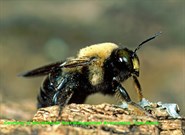
The nest: Carpenter bees do not live in nests or colonies. They bore into wood, where they make galleries for rearing their young. Carpenter bees tend to prefer decaying or weathered wood to new or painted wood.
The threat: Carpenter bees are a serious property threat, and can cause structural damage over time if they are not eliminated. Male carpenter bees can be territorial and may hover in front of one’s face aggressively, but they have no stinger and these actions are merely for show. Female carpenter bees do have a potent sting, which is rarely used.
Dave's Pest Control
1-800-400-6009
A Central Massachusetts Extermination and Pest Control Company Worcester County Pest and Rodent Exterminators
www.davespestcontrol.net
The above information was provided by Missy Henriksen, Vice President of Public Affairs, NPMA Executive Director, Professional Pest Management Alliance.
Reference: www.pestworld.org
July 18, 2012
How To Identify the Pest, the Nest and the Threat - Honey Bees
The pest: Honey Bees . . .

The nest: Honey bees are social insects and live as colonies in hives, with mature colonies of 20,000 – 80,000 individuals.
The threat: Honey bees are not aggressive and do not search for something to attack. Instead, they are defensive and will attack only whatever seems to threaten the colony.
If you're concerned about honey bees in your home or place of business, give Dave a call at 1-800-400-6009.
Dave's Pest Control
1-800-400-6009
A Central Massachusetts Extermination and Pest Control Company Worcester County Pest and Rodent Exterminators
www.davespestcontrol.net
The above information was provided by Missy Henriksen, Vice President of Public Affairs, NPMA Executive Director, Professional Pest Management Alliance.
Reference: www.pestworld.org

Honey bees are between 1/2–5/8
inch in size and orange-brown or black in color.
The nest: Honey bees are social insects and live as colonies in hives, with mature colonies of 20,000 – 80,000 individuals.
The threat: Honey bees are not aggressive and do not search for something to attack. Instead, they are defensive and will attack only whatever seems to threaten the colony.
If you're concerned about honey bees in your home or place of business, give Dave a call at 1-800-400-6009.
Dave's Pest Control
1-800-400-6009
A Central Massachusetts Extermination and Pest Control Company Worcester County Pest and Rodent Exterminators
www.davespestcontrol.net
The above information was provided by Missy Henriksen, Vice President of Public Affairs, NPMA Executive Director, Professional Pest Management Alliance.
Reference: www.pestworld.org
July 4, 2012
How To Identify the Pest, the Nest and the Threat - Mud Daubers
The Pest: Mud Daubers . . .
Mud daubers are long and slender,
usually black in color, and may have pale markings or a metallic
luster.

The threat: Mud daubers are considered beneficial
insects because they control spiders. However, if their nest is
located near human activity, control is warranted.
If you're concerned that you have mud daubers in your home or place of business, give Dave a call at 1-800-400-6009.
Dave's Pest Control
1-800-400-6009
A Central Massachusetts Extermination and Pest Control Company Worcester County Pest and Rodent Exterminators
www.davespestcontrol.net
The above information was provided by Missy Henriksen, Vice President of Public Affairs, NPMA Executive Director, Professional Pest Management Alliance.
Reference: www.pestworld.org
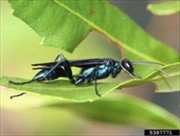
The nest: Mud daubers are solitary wasps and do
not live in colonies. Females construct nests of mud. Many short
mud tubes, usually about 1 inch long, are constructed side by side.
They frequently build nests under eaves, porch ceilings, in garages
and sheds, barns, protected building walls and attics.
If you're concerned that you have mud daubers in your home or place of business, give Dave a call at 1-800-400-6009.
Dave's Pest Control
1-800-400-6009
A Central Massachusetts Extermination and Pest Control Company Worcester County Pest and Rodent Exterminators
www.davespestcontrol.net
The above information was provided by Missy Henriksen, Vice President of Public Affairs, NPMA Executive Director, Professional Pest Management Alliance.
Reference: www.pestworld.org
July 2, 2012
How To Identify the Pest, the Nest and the Threat - Baldfaced Hornets
The Pest: Baldfaced Hornets. . .
Baldfaced hornets are largely black in color, with a mostly white face.

The nest: Baldfaced hornets build aeriel nests out of paper carton. The nests are usually in exposed locations, often on trees, utility poles, overhangs or other structures. The nests can be quite large, growing to 14 inches in diameter and 24 inches in length.
The threat: Baldfaced hornets are considered beneficial insects because they control many pest insect species. However, if their nest is located near a structure, control is warranted.
If you're concerned that you have bald-faced hornets near your home or place of business, give Dave a call at 1-800-400-6009.
Dave's Pest Control
1-800-400-6009
A Central Massachusetts Extermination and Pest Control Company Worcester County Pest and Rodent Exterminators
www.davespestcontrol.net
The above information was provided by Missy Henriksen, Vice President of Public Affairs, NPMA Executive Director, Professional Pest Management Alliance.
Reference: www.pestworld.org
Baldfaced hornets are largely black in color, with a mostly white face.
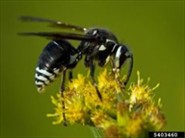
The nest: Baldfaced hornets build aeriel nests out of paper carton. The nests are usually in exposed locations, often on trees, utility poles, overhangs or other structures. The nests can be quite large, growing to 14 inches in diameter and 24 inches in length.
The threat: Baldfaced hornets are considered beneficial insects because they control many pest insect species. However, if their nest is located near a structure, control is warranted.
If you're concerned that you have bald-faced hornets near your home or place of business, give Dave a call at 1-800-400-6009.
Dave's Pest Control
1-800-400-6009
A Central Massachusetts Extermination and Pest Control Company Worcester County Pest and Rodent Exterminators
www.davespestcontrol.net
The above information was provided by Missy Henriksen, Vice President of Public Affairs, NPMA Executive Director, Professional Pest Management Alliance.
Reference: www.pestworld.org
April 28, 2012
Heavy Tick Season Forecasted
The National Pest Management Association (NPMA) is forecasting a heavier tick season than in previous years, but it's not due to the unseasonably mild winter as one might expect. Rather, acorns can be blamed for the predicted surge in tick populations this year, particularly in the Northeastern U.S.
Oak trees produced an extremely large acorn crop in 2010, which led to a boom in the white-footed mouse population last year. As a result, the blacklegged (deer) tick population also increased because the ticks had an abundance of mice to feed on when they hatched. However, this spring those same ticks will be looking for their second meal as nymphs, but a decline in the mice population may force them to find new warm-blooded host - humans.
Experts are concerned about an increase in human cases of tick-borne disease. The NPMA offers the following tick tips:
If you're concerned about ticks in your home or place of business, give Dave a call at 1-800-400-6009.
Dave's Pest Control
1-800-400-6009
A Central Massachusetts Extermination and Pest Control
Company
Worcester County Pest and Rodent Exterminators
www.davespestcontrol.net
Reference: www.pestworld.org
Oak trees produced an extremely large acorn crop in 2010, which led to a boom in the white-footed mouse population last year. As a result, the blacklegged (deer) tick population also increased because the ticks had an abundance of mice to feed on when they hatched. However, this spring those same ticks will be looking for their second meal as nymphs, but a decline in the mice population may force them to find new warm-blooded host - humans.
Experts are concerned about an increase in human cases of tick-borne disease. The NPMA offers the following tick tips:
- Use tick repellent when outdoors and wear long sleeved shirts and pants, preferably light in color, so ticks are easier to detect.
- Use preventative medicine on pets, as prescribed by your veterinarian.
- Once indoors, inspect clothing and your entire body. Check family members and pets that have been outdoors.
- Keep grass cut low, including around fences, sheds, trees, shrubs and swing sets. Remove weeds, woodpiles and other debris from the yard.
- If you find a tick on your body, remove it with a slow, steady pull so as not to break off the mouthparts and leave them in the skin. Then, wash hands and bite site thoroughly with soap and water. Ticks should be flushed down a toilet or wrapped in tissue before disposing in a closed receptacle.
- If you suspect a tick bite, seek medical attention.
If you're concerned about ticks in your home or place of business, give Dave a call at 1-800-400-6009.
Dave's Pest Control
1-800-400-6009
A Central Massachusetts Extermination and Pest Control
Company
Worcester County Pest and Rodent Exterminators
www.davespestcontrol.net
Reference: www.pestworld.org
March 20, 2012
Why Our NPMA Matters
 Here is a bit of history on the National Pest Management Association (NPMA). We believe in the work of this association and we are proud to be a member.
For more than 75 years, the National Pest Management Association (NPMA) has represented the interests of its members and the structural pest control industry. Through the efforts of NPMA, the pest control industry is stronger, more professional, and more unified. The NPMA has guided its members and the pest control industry through the creation of verifiable training, the changing technologies used by the industry, and public and media relations. From its beginning in 1933, the NPMA has been a clear, consistently positive voice for the pest control industry, a voice that is respected and listened to.
The major reason for NPMA's growth and success is that its members have the opportunity to network and share ideas. At each meeting, at each workshop, at each regional conference and national meeting and trade show, members talk to each other and share ideas and expertise, learn about new tools and techniques, and discuss the latest pest issues. In sharing, they grow and prosper and are better prepared to serve their customers. The opportunities to network and learn the latest techniques in professional pest control allow our members to provide qualified and knowledgeable services to their customers.
The values which the founders in 1933 shared are still embraced today as membership of NPMA exceeds 4,600 companies from the United States and other countries.
March 8, 2012
Pests Can Suck The Fun Out Of Spring Break - PArt 2
(Excerpt from a press release for the National Pest Management Association)
Travelers must also take steps to prevent bed bugs from hitching rides home with them in luggage and clothing. The 2011 Bugs Without Borders survey found a significant increase in the prevalence of bed bugs in public places, including hotels/motels and college dorms.
To remain pest-free both during and after Spring Break, NPMA offers the following tips:
Dave's Pest Control
A Central Massachusetts Extermination and Pest Control
Company
Worcester County Pest and Rodent Exterminators
www.davespestcontrol.net
Reference: www.pestworld.org
The NPMA, a non-profit organization with more than 7,000 members, was established in 1933 to support the pest management industry's commitment to the protection of public health, food and property.
Travelers must also take steps to prevent bed bugs from hitching rides home with them in luggage and clothing. The 2011 Bugs Without Borders survey found a significant increase in the prevalence of bed bugs in public places, including hotels/motels and college dorms.
To remain pest-free both during and after Spring Break, NPMA offers the following tips:
- Use insect repellant containing EPA-registered active ingredients like DEET or Picaridin.
- Limit time outdoors or wear long sleeves and pants during dusk and dawn when mosquitoes are most active.
- If bitten by a mosquito, clean the area thoroughly, avoid scratching, and apply anti-itch cream.
- To inspect a hotel room for bed bugs, pull back bed sheets, inspect mattress seams, box springs, headboards, sofas and chairs for telltale brownish or reddish spots, shed skins or bugs.
- Avoid putting luggage on beds or upholstered furniture and store it in a plastic bag.
- Once home, inspect and vacuum suitcases before bringing them inside. Wash and dry all clothes on hot.
- Consumers suspecting an infestation should contact a licensed pest professional.
Dave's Pest Control
A Central Massachusetts Extermination and Pest Control
Company
Worcester County Pest and Rodent Exterminators
www.davespestcontrol.net
Reference: www.pestworld.org
The NPMA, a non-profit organization with more than 7,000 members, was established in 1933 to support the pest management industry's commitment to the protection of public health, food and property.
March 6, 2012
Pests Can Suck The Fun Out Of Spring Break - Part 1
(Excerpt from a press release for the National Pest Management Association)
Every spring, millions of Americans plan vacations during their annual Spring Breaks. The National Pest Management Association (NPMA) reminds those travelers that the best way to prevent pests like mosquitoes and bed bugs from ruining their trips is through preparation and awareness.
“Everyone looks forward to escaping to warmer climates during Spring Break,” noted Missy Henriksen, vice president of public affairs for the NPMA. “However, many travelers forget that whether visiting the tropics or cities in the US, they must be vigilant to avoid bringing pest-related illnesses and issues home with them.”
While bites may seem inevitable, mosquitoes can leave behind more than just an itchy welt. Travelers in tropical areas are susceptible to contracting mosquito-borne diseases, like West Nile virus and Dengue Fever, both reportedly on the rise in the US as well as South America, Mexico and the Caribbean islands.
Dave's Pest Control
1-800-400-6009
A Central Massachusetts Extermination and Pest Control
Company
Worcester County Pest and Rodent Exterminators
www.davespestcontrol.net
Reference: www.pestworld.org
Every spring, millions of Americans plan vacations during their annual Spring Breaks. The National Pest Management Association (NPMA) reminds those travelers that the best way to prevent pests like mosquitoes and bed bugs from ruining their trips is through preparation and awareness.
“Everyone looks forward to escaping to warmer climates during Spring Break,” noted Missy Henriksen, vice president of public affairs for the NPMA. “However, many travelers forget that whether visiting the tropics or cities in the US, they must be vigilant to avoid bringing pest-related illnesses and issues home with them.”
While bites may seem inevitable, mosquitoes can leave behind more than just an itchy welt. Travelers in tropical areas are susceptible to contracting mosquito-borne diseases, like West Nile virus and Dengue Fever, both reportedly on the rise in the US as well as South America, Mexico and the Caribbean islands.
Dave's Pest Control
1-800-400-6009
A Central Massachusetts Extermination and Pest Control
Company
Worcester County Pest and Rodent Exterminators
www.davespestcontrol.net
Reference: www.pestworld.org
January 12, 2012
More Pest Trivia
For our trivia-loving friends . . .
Dave's Pest Control
A Central Massachusetts Extermination and Pest Control Company
www.davespestcontrol.net
Call Dave at 1-800-400-6009.
Reference: www.pestworld.org
- In Mexico you might find pulgas vestidas, or "dressed fleas" for sale. Fleas are dressed in tiny costumes and posed holding tiny loaves of bread, tools, or other items.
- Scorpion babies crawl on top of their mother and live there for the first week or two, feeding on scraps of her catches.
- Although the plague is often believed to be an historical disease, about 10-15 people in the U.S. contract this flea-borne illness each year.
Dave's Pest Control
A Central Massachusetts Extermination and Pest Control Company
www.davespestcontrol.net
Call Dave at 1-800-400-6009.
Reference: www.pestworld.org
January 2, 2012
Did You Know . . .
Did you know . . .
A Central Massachusetts Extermination and Pest Control Company
www.davespestcontrol.net
Call Dave at 1-800-400-6009.
Reference: www.pestworld.org
- The largest butterfly species in the world is a "Birdwing" butterfly from the Solomon Islands, whose wings span twelve inches.
- A rat can swim for 3 days before it drowns.
- Poisons in the body of a Monarch butterfly are sufficient to kill a small lizard and cause severe vomiting in large birds.
A Central Massachusetts Extermination and Pest Control Company
www.davespestcontrol.net
Call Dave at 1-800-400-6009.
Reference: www.pestworld.org
December 12, 2011
NPMA Photo Contest FInalists
 |
| Mosquito by Diane C. Gates |
 |
| Fly by Jerri Moon Cantone |
 |
| Spider by Photag5354 |
To enter, photographers - amateur and avid alike - submitted their favorite pest photos to the PestWorld Photography Contest group on Flickr.
Dave's Pest Control
A Central Massachusetts Extermination and Pest Control Company
www.davespestcontrol.net
Reference: www.pestworld.org
December 8, 2011
NPMA Annouces Photo Contest Winner

Pete Elbert, Photag5345, has won the grand prize of $1,000 for his photo submission of a yellow jacket.
Pete found the female yellow jacket bothering guests inside a hotel lobby in West Virginia. Hoping to get a few good shots of the stinging insect, he captured the pest in a plastic cup and set it free on some shrubbery outside of the hotel. Luckily, he was able to snap about 10 to 12 photos of the yellow jacket before it flew off into the night.
Dave's Pest Control
A Central Massachusetts Extermination and Pest Control Company
www.davespestcontrol.net
Reference: www.pestworld.org
November 20, 2011
Bed Bug Travel Precautions
With the holiday travel season upon us, it may be a good time to review some preventative measures to ensure you do not bring home any unwanted souvenirs!
Another excellent video from Pest 411 and the National Pest Management Association.
Dave's Pest Control
Call Dave at 1-800-400-6009.
Serving Central Massachusetts
www.davespestcontrol.net
Another excellent video from Pest 411 and the National Pest Management Association.
Dave's Pest Control
Call Dave at 1-800-400-6009.
Serving Central Massachusetts
www.davespestcontrol.net
October 22, 2011
Winter Pests Reminder
 It's time for your winter tenants to start moving in. My tenants?
That's right. When temperatures begin to fall, an estimated 21 million pests head inside every year because their food sources are less accessible and they cannot adapt to the cooler weather.
More than a nuisance, these household pests, such as Indian meal moths, ants, mice, spiders and termites, can trigger allergies and asthma attacks, spread diseases, transmit bacteria and contaminate food. They can also compromise the value of a home by gnawing through electrical wires that can create fire hazards, as well as chewing through support beams and drywall, risking structural stability.
Pests find ways into your home by hitching rides on the items brought in, such as firewood, packages, and even on Felix or Fido. They also gain entry through small cracks and crevices in the structure’s exterior. Fortunately, there are ways you can prevent these unwanted guests through effective pest-proofing measures.
The NPMA offers the following tips on pest-proofing your home:
- Install door sweeps on exterior doors and repair damaged screens
- Screen vents and openings to chimneys
- Seal cracks and holes on the outside of the home, including areas where utilities and pipes enter the home, using caulk and/or steel wool
- Store food in airtight containers and dispose of garbage regularly
- Keep attics, basements and crawl spaces well ventilated and dry
- Replace loose mortar and weather stripping around the basement foundation
- Eliminate all moisture sites, including leaking pipes and clogged drains, that provide the perfect breeding site for pests
- Inspect items such as boxes, grocery bags and other packages brought into the home
- Store firewood at least 20 feet away from the house and keep shrubbery trimmed and cut back from the house
Dave's Pest Control
Serving Central Massachusetts
www.davespestcontrol.net
Reference: www.pestworld.org
Subscribe to:
Posts (Atom)


